Don’s inferences about the changes to come in the distribution industry could very well affect our provision of parts to our customers. His inferences about the employment situation are certainly in agreement with what we are seeing in our shops. 1 minute takeaway:Cultural unemployment occurs when the jobs available are not desired by unemployed workers due to cultural patterns. Factory and truck driving jobs were desirable jobs a generation ago, but the culture has changed and now a large portion of the available labor pool is avoiding these careers.
Guest Post by Don Ake. FTR (Freight Transportation Research) “In December I attended the Chicago FED Economic Outlook Symposium. During a presentation on the steel industry, the speaker noted that companies are having problems hiring enough production workers. Then, during a presentation on the housing industry, the speaker noted that builders can’t find enough skilled tradesmen for the jobs available. Finally, an auto industry analyst stated that there are unmet employment needs there as well.
“This certainly isn’t good news for the trucking industry. My company, FTR (Freight Transportation Research), is estimating the current driver shortage at 200,000 and, based on the presentations in Chicago, trucking fleets will not only be competing for workers inside the industry, they will be competing with many other industries. And this situation will only get worse, considering the potential of stronger economic growth and that we are only at the start of the baby-boomer retirement wave.
“I recently found a newspaper article from 2007 that predicted a huge worker shortage (in general) beginning in 2010. While initially I found the headline humorous, the Great Recession did not eliminate this worker shortage, it only delayed it. It would seem the worker shortage predicted in the article began in 2013.
“But how can there be a widespread labor shortage with unemployment still near 7% (and “real unemployment much higher)? One factor is “structural unemployment.” Structural unemployment occurs when unemployed workers lack the skills needed for the jobs available or do not live in the part of the country where job openings exist.
“The Great Recession created significant structural unemployment. Many workers lost jobs they had worked in for 10, 20, or even 30 years. Their jobs skills are either not transferable to other industries or not adequate in a changing, high-tech oriented economy. In addition, the housing bust made workers less mobile. It is difficult, in some cases impossible, to sell your house if you are “underwater” or if you live where housing prices are depressed. (I identified the structural unemployment problem created by the recession in October 2009, one of the first people to do so).
“But structural unemployment cannot fully explain the labor shortage. I believe there is a new factor which I will call “cultural unemployment.” Cultural unemployment occurs when the jobs available are not desired by unemployed workers due to cultural patterns. You could also call it “Ugly Job Syndrome.” Factory and truck driving jobs now fit is this category. These were desirable jobs a generation ago, but the culture has changed and now a percentage of the available labor pool is avoiding these professions.
“Also, government policies have contributed to this cultural unemployment. Cheap college loan money led to an over-supply of college graduates (and an under-supply of blue collar workers), and an increase in the social “safety-net” allows more people to eschew physical and more demanding labor. And the recent report by the Congressional Budget Office predicts that the Affordable Care Act will motivate people not to work full-time, if at all.
“So as bad as you think the driver shortage is, it probably is even worse given the overall labor market. And due to regulation, demographics, and economic cycles, it will continue to exacerbate. This is going to cause significant changes in the trucking industry as companies respond to the changing labor economics. There is no single solution to this problem. Yes you will see higher wages and shorter routes, but you will also see changes in the distribution system (more warehouses, perhaps) and more and different types of intermodal. It will also force carriers and shippers to develop creative solutions that maximize the number of drivers and maximize the efficiency of these drivers. This will take some hard thinking and analysis. Time to start thinking now.”
Time to train more truckers (and Machinists!)
Don’s focus is on the Transportation industry, but his insights validate what we are seeing in the precision machining advanced manufacturing industry.
I think Don makes a great point about the issue being more than just structural unemployment, what he identifies as “cultural unemployment.”
1) Martensite is the hardest and most brittle microstructure obtainable in a given steel.
2) Martensite hardness of the steel is a function of the carbon content in that steel.
3) Martensite results from cooling from austenitic temperatures rapidly by pulling the heat out using a liquid quenchant before pearlite can form.
4) As quenched Martensitic structures are too brittle for economic use-they must be tempered.
5) Reheating as quenched Martensite to a temperature just below the AC1 results in the best combinations of strength and toughness.
There is more than one way to assure machine guarding, Using a door interlock in conjunction with a Logan Clutch is a possibility with additional benefits.
3 reasons for precision optimism in 2011 include double digit increase in rate of steel and aluminum sales, auto sales approaching 13 million, hours scheduled of work in our shops.
The Steel Industry shows rising shipments and imports in 2011, while room remains for improvement in infrastructure and commercial and residential construction markets.
The prices of the raw materials that we track have continued to rise with double digit percentage gains over January. Price increase announcements in addition to surcharge increases since our last report.
The need for training is not diminished by the prospect of losing your trainees. In fact, it is made all the more important by the fact that they might stay, untrained.

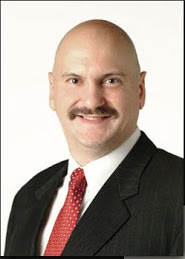 “In December I attended the Chicago FED Economic Outlook Symposium. During a presentation on the steel industry, the speaker noted that companies are having problems hiring enough production workers. Then, during a presentation on the housing industry, the speaker noted that builders can’t find enough skilled tradesmen for the jobs available. Finally, an auto industry analyst stated that there are unmet employment needs there as well.